Navigating the engineering constraints between seamless and welded metal pipelines requires rigorous analysis of pressure tolerance, structural homogeneity, and total cost of ownership (TCO).
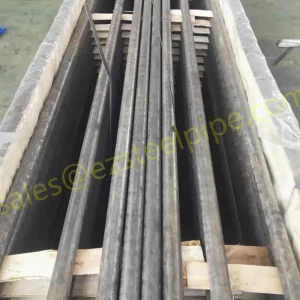
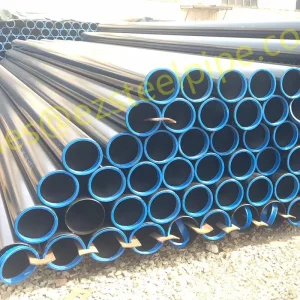
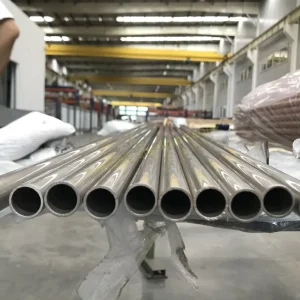
Manufactured through continuous hot extrusion or rotary piercing (e.g., Mannesmann process), seamless pipes present zero longitudinal or spiral seams. This continuous molecular structure provides superior resistance against ultra-high pressure gradients, corrosive fluid impacts, and extreme thermal cycling environments typical in power generation and petrochemical distillation refineries.
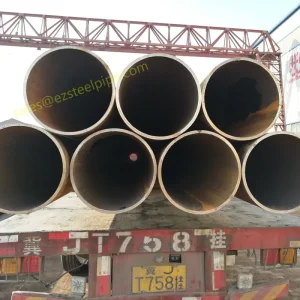
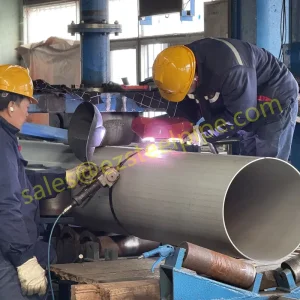
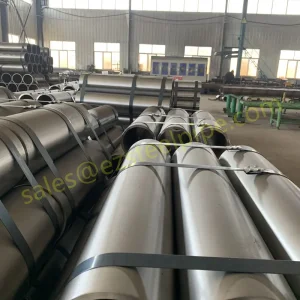
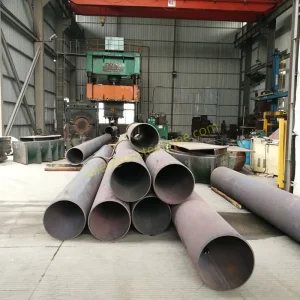
Produced by forming flat steel coils or plates into cylindrical shapes and sealing the seam using advanced electric resistance welding (ERW), longitudinal submerged arc welding (LSAW), or spiral submerged arc welding (SSAW). Modern non-destructive testing (NDT) ensures weld seam integrity, making welded pipe exceptionally economical and dimensionally consistent for large-diameter infrastructures.
While seamless pipes eliminate the theoretical weak point of a weld line, advanced normalization and post-weld heat treatment (PWHT) applied in Industry 4.0 factories often yield weld zone yield strengths matching or exceeding the parent metal. Deciding between both hinges on specific code compliance (ASME B31.3 / B31.4) and operating fluid toxicity.
Leveraging state-of-the-art automation, IoT-integrated rolling mills, and rigorous quality inspection frameworks to redefine global procurement standards.
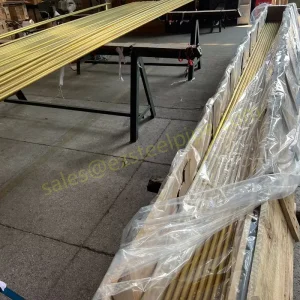
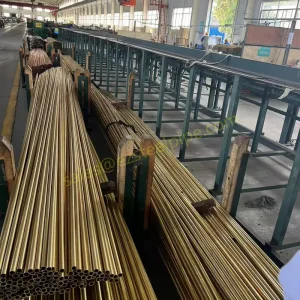
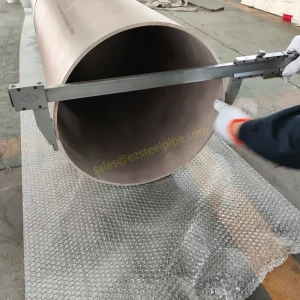
Our in-house production facilities span Cangzhou, Yangzhou, and Lishui, enabling strict metallurgical control from raw billet selection to finished tube drawing. Advanced computerized numerical control (CNC) guarantees ultra-precise outer diameter (OD) and wall thickness tolerances.
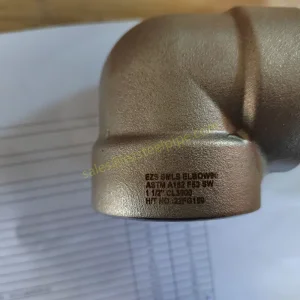
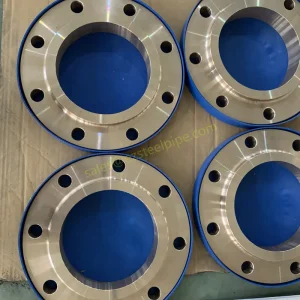
Beyond individual piping items, we integrate comprehensive material packages including specialized flanges, pipe fittings, and alloy valves. This minimizes procurement friction and ensures unified quality certification across entire project lifecycles.
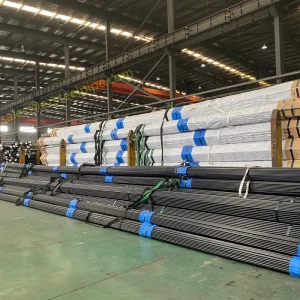
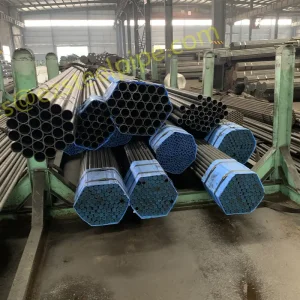
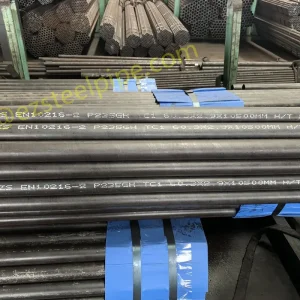
Strategic stock management systems maintain massive ready-to-ship inventories across carbon steel, stainless steel, and copper-nickel alloys. Real-time digital tracking empowers global EPC contractors to meet aggressive project deadlines safely.
Answering critical engineering and sourcing queries to optimize project efficiency and compliance.
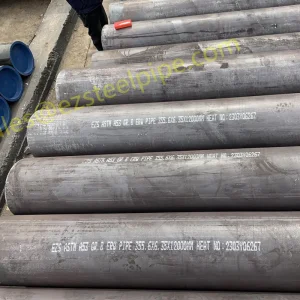
Seamless pipes are mandated when operating pressures and temperatures exceed the safety thresholds governed by standard longitudinal weld factors (such as ASME code weld joint efficiency factor $E < 1.0$). They are ideally deployed in high-temperature steam lines (ASTM A106 / A335) and deep-water downhole tubulars where uniform hoop stress distribution is paramount.
Leading factories employ automated ultrasonic testing (AUT), online electromagnetic inspection, X-ray radiography, and complete post-weld thermal annealing. These rigorous protocols eliminate internal voids and residual stresses, ensuring welded pipes meet stringent EN and ASTM criteria for municipal water transport, structural engineering, and low-pressure fluid transmission.
Global procurement teams must balance raw material cost volatility, specific regional codes (e.g., GOST for Eastern Europe, ASTM/ASME for the Americas, EN for Europe), logistics lead times, and factory verification audits. Partnering with a vertically integrated manufacturer ensures direct material traceability and comprehensive Mill Test Certificates (MTCs) conforming to EN 10204 3.1/3.2.
 EZ STEEL