Home >
Pipe Fittings >
High-Quality Socket-Welding Pipe Fittings for Piping System Manufacturer, Factory
1 / 5
High-Quality Socket-Welding Pipe Fittings for Piping System Manufacturer, Factory
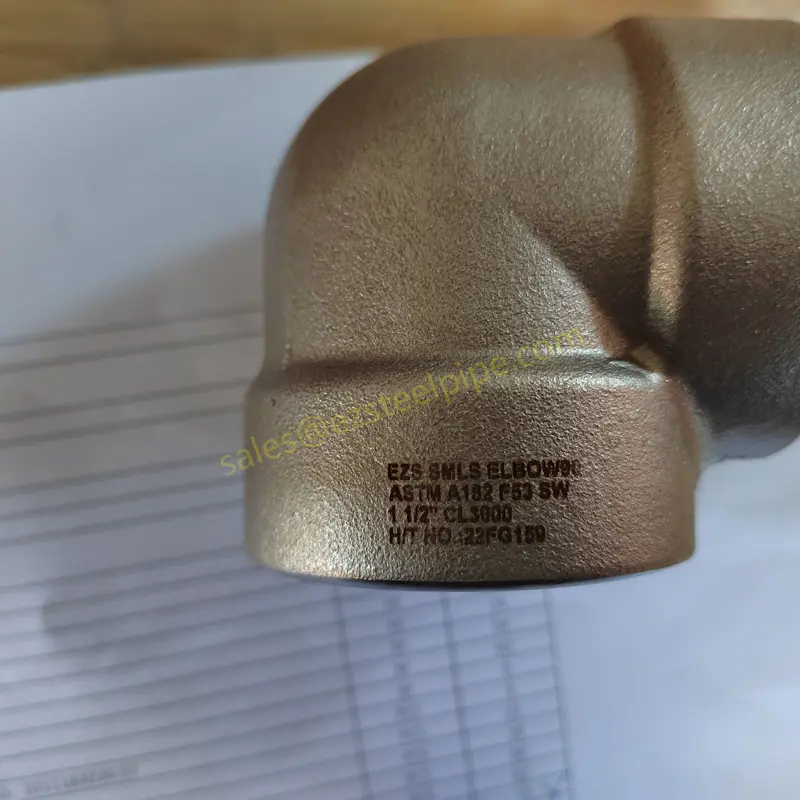
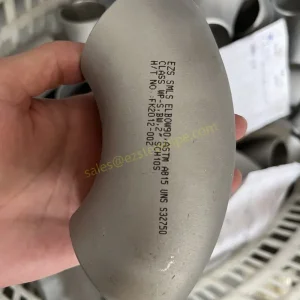
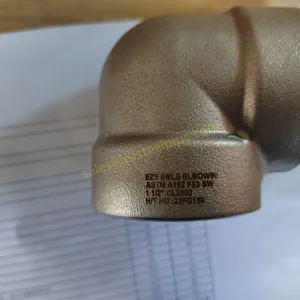
Socket-welding (SW) pipe fittings are used in high-pressure piping systems where a strong, leak-proof connection is required. Unlike butt-welding (BW) fittings, which are welded around the pipe's outer diameter, SW fittings involve inserting the pipe into a recessed area (socket) and then welding around the joint.
EN 10241 / ISO 5251: European Standards with metric dimensions for oil, gas, and chemical industries.
JIS B2306: Japanese Standard with JIS material grades.
Installation & Welding Tips
Gap Requirement: Leave a 1.6mm (1/16") gap between pipe and socket shoulder to prevent cracking.
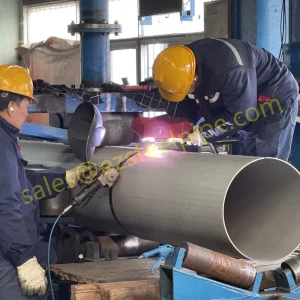
Welding Method: TIG/GTAW (best for stainless steel); SMAW (Stick Welding) for carbon steel.
Post-Weld Inspection: Visual check for cracks/porosity; Dye penetrant testing (PT) for critical systems.
Standard Dimensions & Pressure Classes
Fitting Type
Size Range (NPS)
Max. Typical Size
SW Elbow (90°/45°)
⅛" to 4"
4"
SW Tee / Coupling
⅛" to 4"
4"
SW Union
⅛" to 2"
2"
Pressure Class Ratings (ASME B16.11)
Pressure Class
Max. Working Pressure (PSI)
Typical Applications
Class 3000
~750 PSI (51 bar)
General process piping
Class 6000
~1500 PSI (103 bar)
High-pressure hydraulics
Class 9000
~2250 PSI (155 bar)
Steam, critical systems
Material Range
Material Type
ASTM Standard
Common Grades
Carbon Steel
ASTM A105
A105 (Forged)
Stainless Steel
ASTM A182
F304, F316, F321
Alloy Steel
ASTM A182
F11, F22, F91
Low-Temp CS
ASTM A350
LF2, LF3
Frequently Asked Questions
1. Why is a 1.6mm gap required during SW fitting installation?
The gap prevents the pipe from bottoming out against the socket shoulder during welding, which allows for thermal expansion and reduces the risk of stress cracking in the weld.
2. What are the most common pressure classes for Socket Weld fittings?
The most common classes according to ASME B16.11 are Class 3000, Class 6000, and Class 9000, with Class 3000 being the standard for most industrial applications.
3. Can SW fittings be used for large diameter pipes?
Socket Weld fittings are generally limited to small-bore piping, typically NPS 2" or smaller. For pipes larger than 4", Butt-Weld (BW) fittings are standard.
4. How do SW fittings differ from Threaded fittings?
SW fittings provide a permanent, leak-proof welded joint that is more resistant to vibration and high pressure compared to threaded fittings, which rely on sealants and mechanical threads.
5. Which materials are best for corrosive environments?
Stainless steel grades like ASTM A182 F304 or F316 are preferred for corrosive environments, while Carbon Steel (A105) is used for general high-temperature and high-pressure service.
6. What is the standard governing the dimensions of forged SW fittings?
ASME B16.11 is the most widely recognized global standard for the dimensions, ratings, and material requirements of forged socket-welding and threaded fittings.
 EZ STEEL