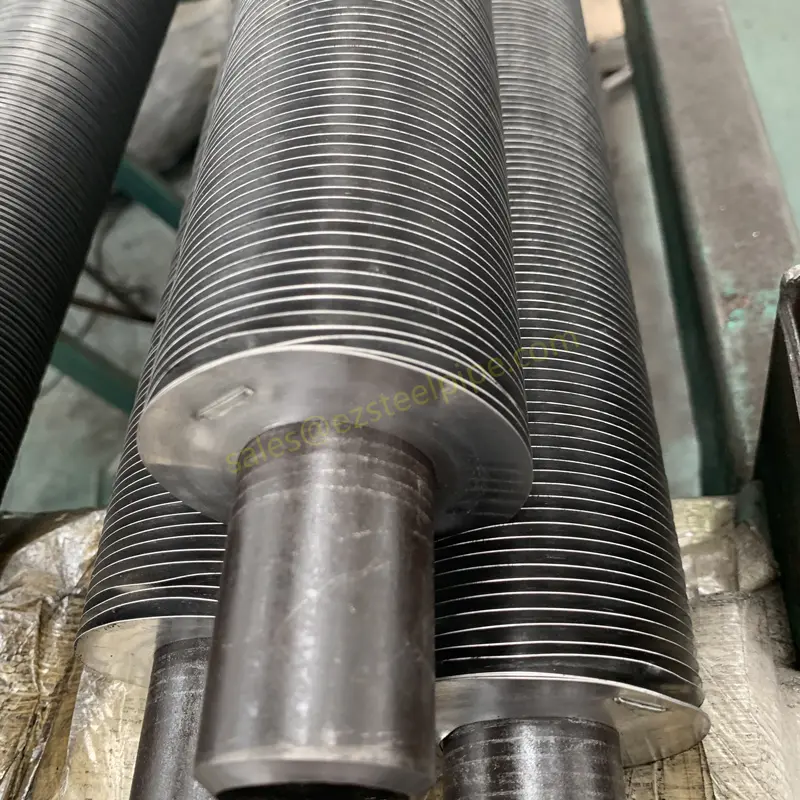
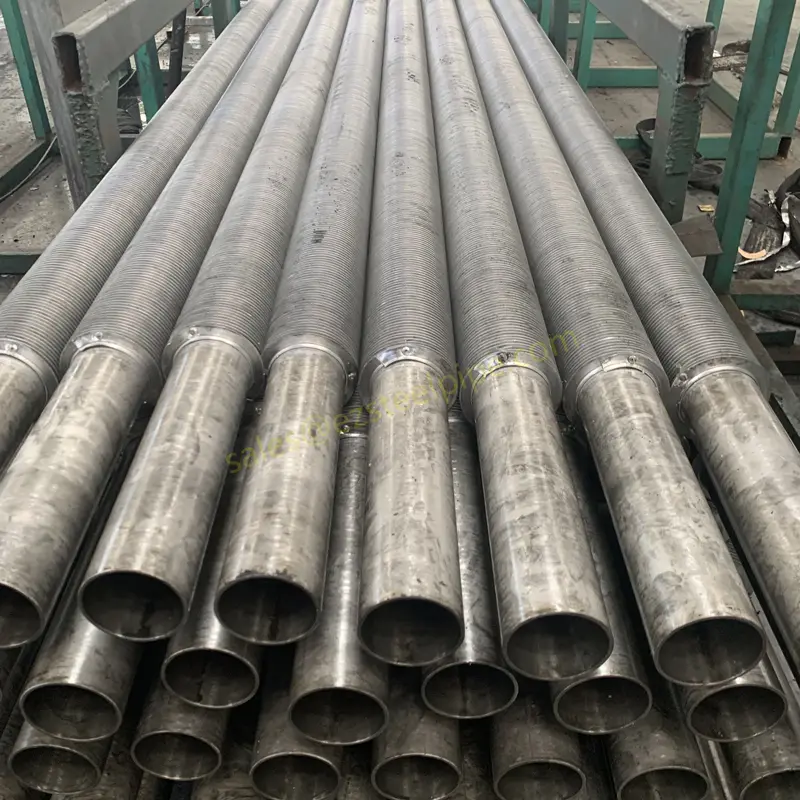
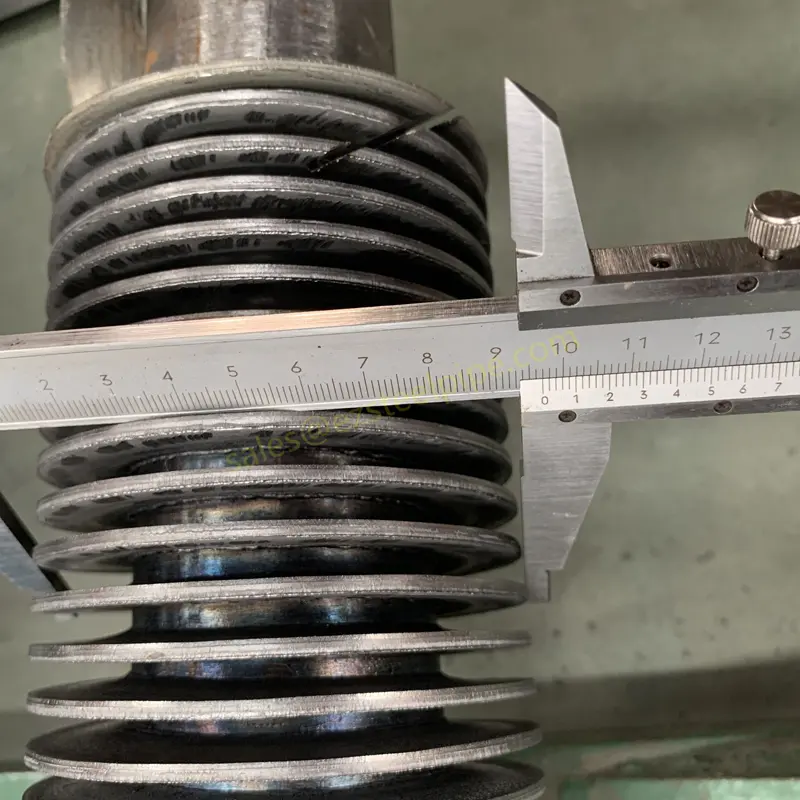
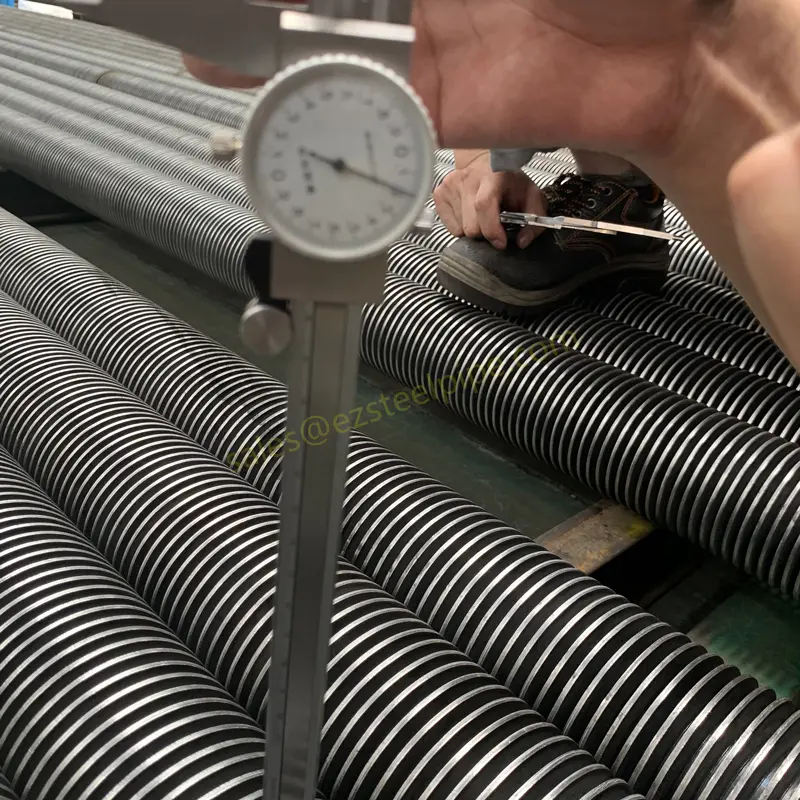
China Finned Tubing for Heat Transfer Efficiency Improving Manufacturers, Suppliers

Finned tubes are essential components in heat transfer equipment, enhancing heat exchange efficiency by increasing the surface area in contact with the fluid (gas or liquid). They are widely used in industries like power plants, refineries, HVAC, and chemical processing. Below is an overview of manufacturing methods and popular types of finned tubes:

Product Description

Manufacturing Methods of Finned Tubes

Finned tubes are manufactured using different techniques depending on the material, application, and performance requirements:

Extruded Fins (Integral Fins)
- A bimetallic tube (e.g., aluminum outer layer over a steel or copper core) is passed through a machine that extrudes fins from the outer layer.
- Provides excellent mechanical strength and thermal conductivity.
- Used in high-temperature applications like heat recovery systems.
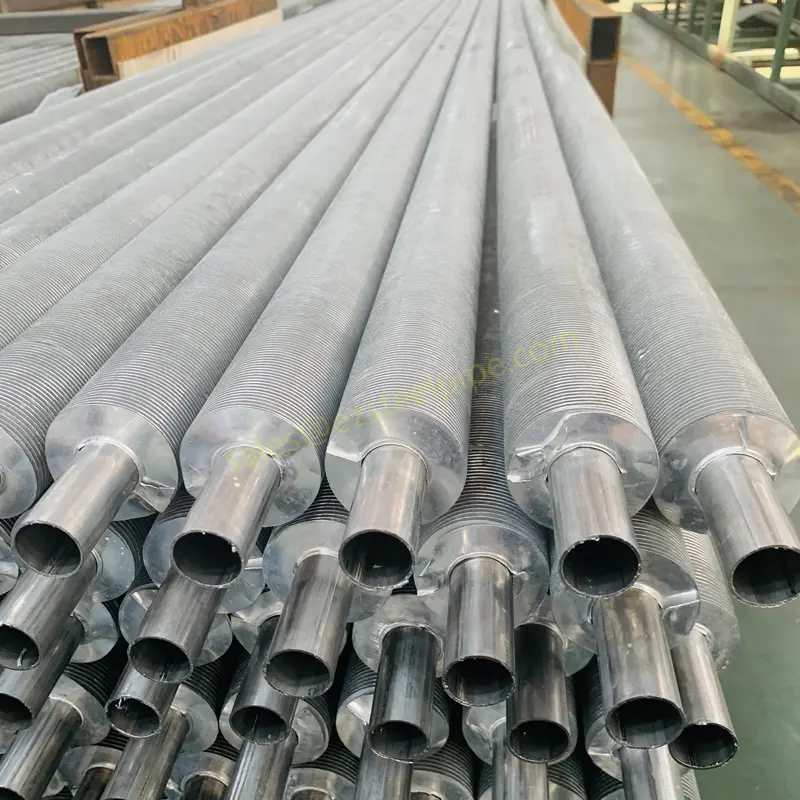
Wrapped (Spiral) Fins
- A metal strip (usually aluminum or copper) is helically wound around the base tube and bonded by adhesive, brazing, or welding.
- Cost-effective and widely used in air-cooled heat exchangers.
- Not suitable for very high temperatures due to potential bond failure.
Embedded (G-Fin) Fins
- A groove is machined into the tube, and a fin strip is inserted and mechanically locked into place.
- Good thermal contact and resistance to fin loosening.
- Common in process heaters and boilers.
Welded Fins
- Fins are individually welded onto the tube (e.g., L-foot, overlapped, or stud-welded fins).
- Suitable for high-temperature and high-pressure applications (e.g., economizers, waste heat recovery).
- More expensive but highly durable.
Longitudinal Fins
- Fins run parallel to the tube axis, used where axial flow is preferred (e.g., in some air coolers and condensers).
- Often seen in petrochemical applications.
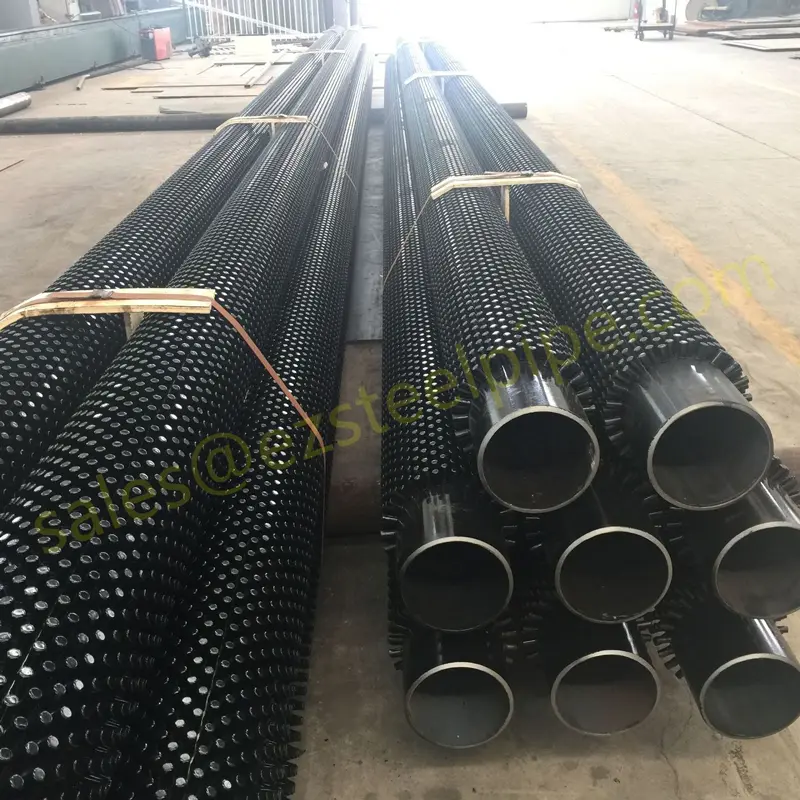
Studded Fins
- Small studs are welded onto the tube surface to increase turbulence and heat transfer.
- Used in fluidized bed heat exchangers and boilers.

Popular Types of Finned Tubes in Heat Transfer Equipment

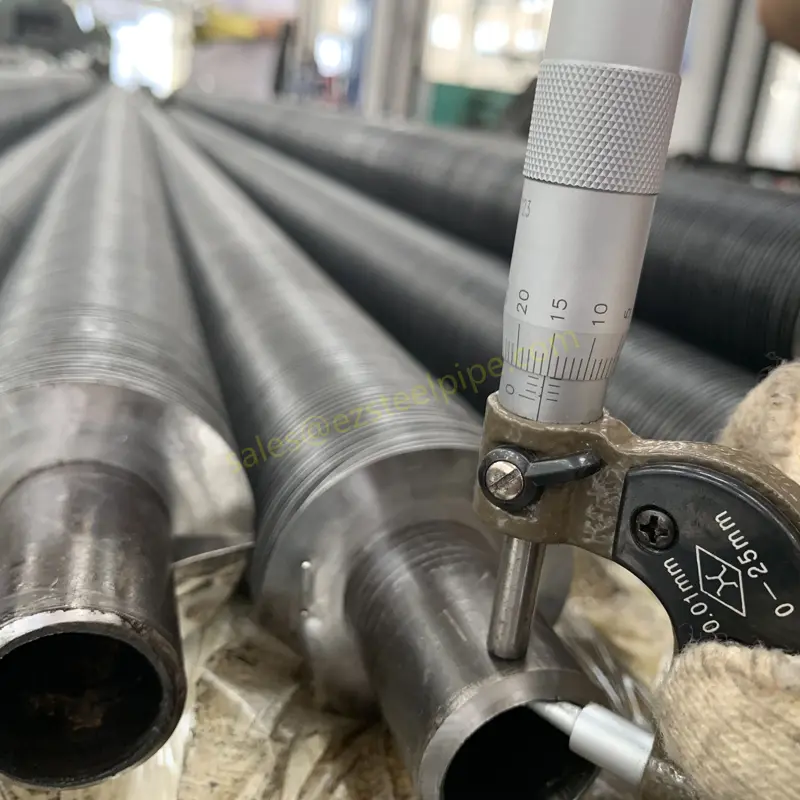
Helical (Spiral) Fin Tubes
- Most common type, used in air-cooled heat exchangers (ACHEs). Materials: Aluminum, copper, or stainless steel.
Extruded Fin Tubes
- High thermal efficiency, used in heat recovery steam generators (HRSGs). Base tube: Carbon steel / stainless steel; Fin material: Aluminum.
L-Foot & LL-Foot Finned Tubes
- Fins have an "L" shape at the base for better bonding. Used in refinery and power plant applications.
Serrated Fins
- Fins have cuts to enhance turbulence and heat transfer. Used in gas-to-gas heat exchangers.
Knurled Fin Tubes
- Surface roughening improves heat transfer in condensers and evaporators.
Corrugated Fin Tubes
- Wavy fins increase surface area and turbulence, improving efficiency.

Selection Factors for Finned Tubes

  • Temperature & Pressure: High-temp applications need welded or extruded fins.
  • Corrosion Resistance: Aluminum fins for acidic environments, stainless steel for harsh conditions.
  • Fluid Type: Gas-side fins need higher surface area, while liquid-side may use low-fin tubes.
  • Cost: Wrapped fins are economical, while extruded/welded fins are more durable.
Common Applications
- Power Plants: Air-cooled condensers, HRSGs.
- Oil & Gas: Preheaters, furnaces.
- HVAC: Chillers, radiators.
- Chemicals: Waste heat boilers, reactors.

Finned Tube and Fin Material Optimization

The choice of materials depends on temperature, pressure, corrosion resistance, and thermal conductivity.

Base Tube Materials (Core Tube)
Carbon Steel: Low cost, high strength (ASTM A179, A192).
Stainless Steel: Excellent corrosion resistance (304L, 316L, 321).
Alloy Steels: For extreme heat up to 600°C+ (T11, T22, T91).
Copper Alloys: Superior thermal conductivity for HVAC/Refrigeration.
Nickel Alloys: For extreme corrosive environments (Inconel, Monel).
Fin Materials
Aluminum: Most common, high conductivity, lightweight.
Copper: Best conductivity, used in condensers.
Stainless Steel: Durable at high temperatures and harsh environments.
Carbon Steel: Low-cost option for industrial heaters.
Application Recommended Base Tube Recommended Fin Material
Air-cooled heat exchangers Carbon steel / SS 304 Aluminum
Boilers & economizers Carbon steel (A192, P11) Carbon steel / SS
Chemical plants SS 316 / Nickel alloys SS 316 / Aluminum
Refrigeration & HVAC Copper Copper / Aluminum
High-temp exhaust gas SS 321 / Inconel SS 321 / High-alloy steel

Frequently Asked Questions (FAQ)

What are the primary benefits of using finned tubes?
Finned tubes significantly increase the external surface area of the tube, which enhances the heat transfer rate between the fluid inside the tube and the medium outside, making heat exchangers more compact and efficient.
Which material is best for high-temperature applications?
For temperatures exceeding 500°C, high-alloy steels like T22 or T91, or nickel alloys such as Inconel, are recommended. Stainless steel fins are typically used for the 200°C to 500°C range.
Why is aluminum the most common material for fins?
Aluminum offers an excellent balance of high thermal conductivity, light weight, and corrosion resistance at a relatively low cost compared to copper or stainless steel.
How do extruded fins differ from wrapped fins?
Extruded fins are formed from the tube wall itself (or an outer sleeve), providing superior mechanical bond and thermal contact. Wrapped fins are tension-wound around the tube, making them more cost-effective but less durable at extreme temperatures.
Can finned tubes be used in corrosive environments?
Yes, by selecting appropriate materials such as Stainless Steel 316L, Duplex steel, or Nickel alloys (Monel), finned tubes can effectively operate in acidic, marine, or highly corrosive industrial environments.
What factors influence the selection of fin type?
Key factors include the operating temperature and pressure, the type of fluids involved, required heat transfer efficiency, environmental corrosion levels, and overall budget constraints.

Related Products