Premium class industrial sealing gaskets and pipe accessories certified for structural strength and extreme environment resistance.
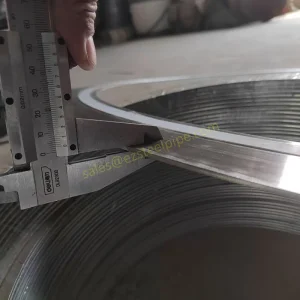
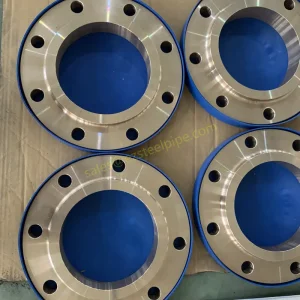
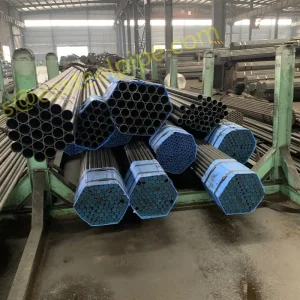
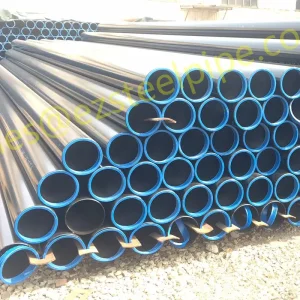
Founded in 1994, EZ Steel Industrial Co.,Ltd has evolved into a global leader in high-performance industrial pipelines, specializing in alloy steel, carbon steel, stainless steel, and copper-nickel-based alloy products. Over three decades of execution has cemented our status as a premier, vertically integrated manufacturer and trading specialist.
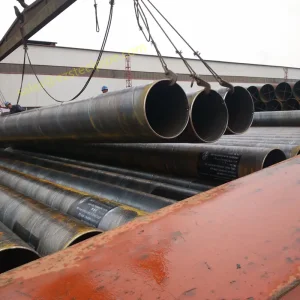
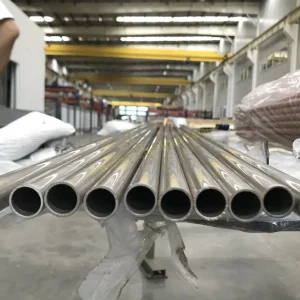
From our state-of-the-art facilities spanning over 40,000 m², we engineer and package comprehensive piping systems. This includes high-precision industrial metal pipelines, valves, flanges, fittings, and specialized sealing components such as gaskets, stud bolts, and nuts. Our engineering expertise ensures direct compatibility across mechanical joints for marine, petrochemical, mining, and power generation projects globally.

Providing vertically integrated pipe supply, engineering design, and end-to-end quality assurance.
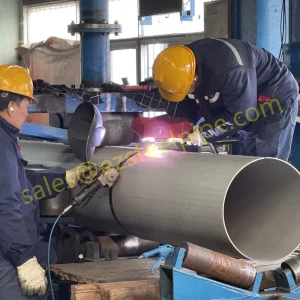
Equipped with advanced cold-rolling, welding, and heat treatment facilities, we execute strict in-house quality control from smelting oversight to final dimensional checks, producing standards compliant with ASME, API, and EN specifications.
We maintain a strategic inventory of critical piping materials, carbon steel, and specialty alloys in our logistics hubs to support fast mobilization for petrochemical shutdowns, maintenance outages, and emergency infrastructure works.
Our ISO 9001-certified laboratories carry out mechanical testing, hydrostatic checks, ultrasonic scanning, and positive material identification (PMI) to ensure mill test certificates mirror the physical capabilities of our materials.
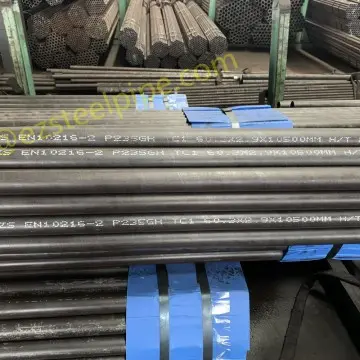
Brisbane, as the primary industrial gateway of Queensland (QLD), plays an indispensable role in supporting large-scale resource extraction, chemical processing, and maritime shipping. Key regional assets like the Port of Brisbane, Lytton Refinery, and nearby mineral processing facilities generate high demands for extreme-performance gaskets, high-strength stud bolts, and structural nuts.
For operations based in Queensland, maintaining mechanical integrity in process piping is paramount. High humidity, coastal salinity, and corrosive processing agents require highly specific metallurgy and elastomer engineering. Standard fastening materials rapidly succumb to localized pitting, galvanic corrosion, and stress corrosion cracking (SCC). This makes specialized alloy selection, such as ASTM A193 Grade B7/B16 for bolts and ASTM A194 for nuts, mandatory for processing safety.
Furthermore, Queensland’s coal seam gas (CSG) pipelines in the Surat and Bowen basins, terminating in Gladstone's LNG export facilities, rely heavily on ASME B16.20 spiral wound gaskets and high-tensile stud bolts. Localized engineering support from a trusted manufacturer like EZ Steel enables asset operators to optimize joint design, select appropriate sealing fillers, and mitigate safety risks associated with flange leakage.
Modern global process industries are undergoing structural changes, driven by energy transition initiatives, carbon containment policies, and deeper process intensification. As fluid networks operate at higher temperatures and pressures, traditional carbon steel sealing methods are giving way to advanced material sciences. The global demand for specialized alloy piping components, high-density gaskets, and grade-certified fasteners has expanded exponentially.
A notable trend is the rapid scaling of green and blue hydrogen transport networks. Hydrogen atoms, being the smallest elements, easily diffuse into the atomic structure of metals, causing hydrogen embrittlement. This hazard requires the deployment of specialty austenitics, nickel-copper alloys (such as UNS N04400), and custom-engineered gaskets that prevent micro-leakage. Concurrently, the growth of offshore wind substations, deep-water drilling, and desalination projects demands high corrosion-resistant materials like copper-nickel and super duplex alloys.
| Industry Segment | Typical Temperature/Pressure Range | Standard Gasket Selection | Recommended Bolting Material |
|---|---|---|---|
| Petrochemical & Refining | -50°C to 550°C / up to Class 2500 | Spiral Wound (316L/Graphite) with Inner/Outer Rings | ASTM A193 B7 / ASTM A194 2H |
| Cryogenic LNG Processing | -196°C to 80°C / Class 150 to 900 | Kammprofile Gasket with PTFE Layering | ASTM A320 L7 / ASTM A194 Gr. 7 |
| Offshore & Marine Piping | Ambient / High Corrosive Chloride Load | Corrugated Metal with Flexible Graphite / RTJ | Silicon Bronze / Duplex Stainless Steel |
| Subsea Mining & Slurry | High Impact / Abrasive Media | Ring Type Joint (RTJ) Monel/316L | Inconel 718 / Super Duplex |
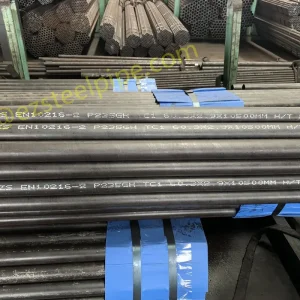
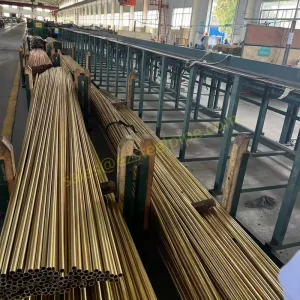
Specialized seamless alloy tubes and efficiency-improving finned tubings, optimized for Brisbane's heavy power and processing plants.
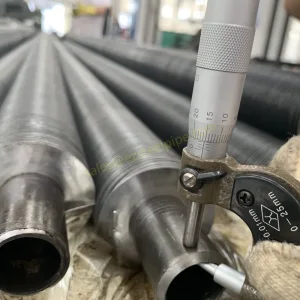
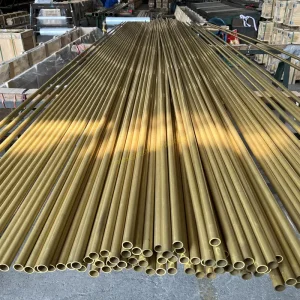
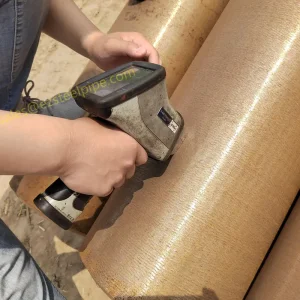
How our industrial grade piping and sealing technologies solve critical engineering challenges across Queensland's sectors.
The Port of Brisbane handles heavy volumes of maritime shipping. Pipelines exposed to marine spray face severe chloride-induced corrosion. Implementing our ASTM B466 copper-nickel and ASTM B165 nickel-copper alloy systems prevents biofouling and material degradation, while marine-grade non-asbestos gaskets secure high-integrity pipeline joints.
Transporting raw coal seam gas involves high mechanical stress and abrasive particulate matter. High-pressure API 5L line pipes require specialized ASME B16.20 spiral wound gaskets with stainless steel windings and high-tensile stud bolts (ASTM A193 B7) to maintain structural sealing despite thermal cycling and earth movement.
Processing plants in Pinkenba and Lytton operate steam generation boilers and chemical reactors at extreme temperatures. Utilizing ASTM A335 seamless ferritic alloy pipes and nuclear-certified components provides mechanical stability, while tailored gasket-bolt assemblies minimize the risk of flange failure.
Choosing the correct industrial gasket involves analyzing fluid chemistry, operating temperature, and internal pressures. A mismatch in design parameters can cause premature flange joint leakage or structural failures. Standard gasket configurations fall into three main classes:
For structural fastening, ASTM standards dictate material choices based on physical and chemical limits:
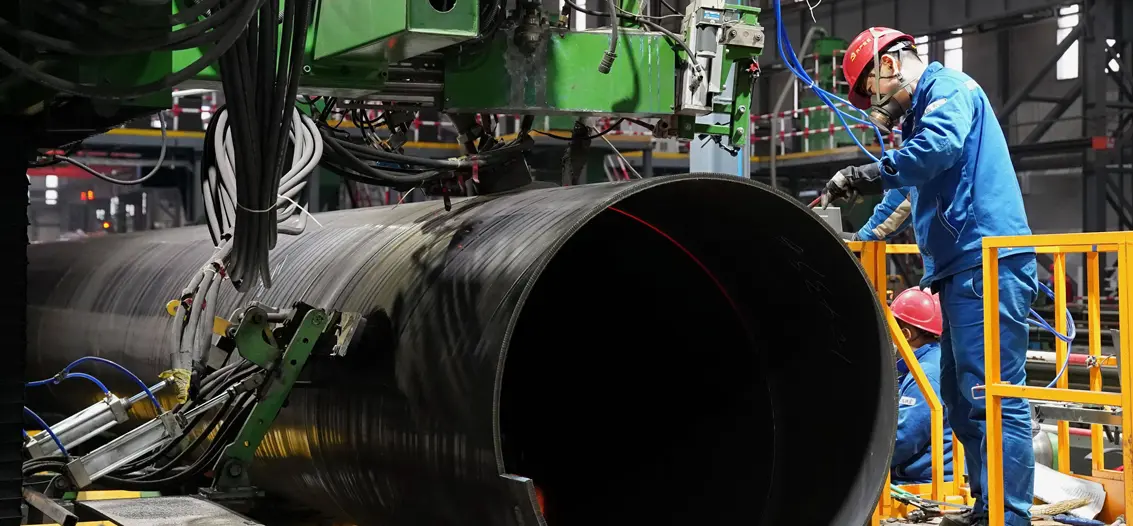
As heavy industry shifts toward digital monitoring and decarbonization, pipeline components must evolve to support automated operations. EZ Steel is actively developing new materials to meet these changing industry needs.
One major focus is Smart Sealing Systems. By embedding micro-sensors within the metal core of spiral wound gaskets, operators can monitor real-time contact pressure and torque levels. If joint load drops, sensors send alert signals to plant control systems, allowing maintenance teams to address potential leaks before they occur.
In addition, the rise of hydrogen transport requires new barrier coatings. Hydrogen gas can penetrate traditional polymer seals, leading to escape emissions. Our engineering team is testing nano-layered ceramic and metal coatings to reduce molecular permeability, ensuring reliable sealing for green hydrogen transport networks.
Finally, we are optimizing automated manufacturing lines for custom stud bolts. By integrating CNC thread rolling machinery with inline ultrasonic testing, we ensure every fastener meets dimensional standards, helping to lower project lead times for our clients.
Expert answers to common engineering questions about gaskets, stud bolts, and industrial pipeline networks.
Spiral wound gaskets are preferred for applications with operating pressures exceeding ASME Class 300, temperatures above 200°C, or systems subject to thermal cycling. Their metal windings act like a spring, maintaining structural resilience under changing loads where soft elastomers would crack or deform.
This pairing ensures matching mechanical strengths. ASTM A193 B7 bolts offer a minimum tensile strength of 860 MPa. ASTM A194 Grade 2H heavy hex nuts are heat-treated to resist thread stripping under high installation torque, preventing joint failure under pressure.
High coastal salinity introduces airborne chlorides that cause pitting and crevice corrosion on standard steel fasteners. For outdoor or marine applications in Brisbane, we recommend using protective coatings (hot-dip galvanized, PTFE) or selecting corrosion-resistant alloys like duplex stainless steel or Monel.
Critical systems require material traceability through EN 10204 3.1 or 3.2 mill test certificates. Gaskets must meet API 6FB or ISO 10497 fire test standards, and fasteners should comply with ASTM A193/A194 to verify physical properties.
Explore our complete catalog of certified alloy steel, copper-nickel, and stainless pipeline components tailored for Brisbane's industrial specifications.
 EZ STEEL