When engineers ask “how much weight can a pipe flange hold,” they rarely mean one simple number. A flange does not act like an isolated steel plate. It transfers loads through bolts, gasket, pipe wall, welds, and connected equipment. Its safe capacity depends on flange class, material, size, temperature, pressure, bolt condition, and loading direction. A 150-pound flange is not automatically safe for a 150-pound suspended object. That assumption can fail quickly.
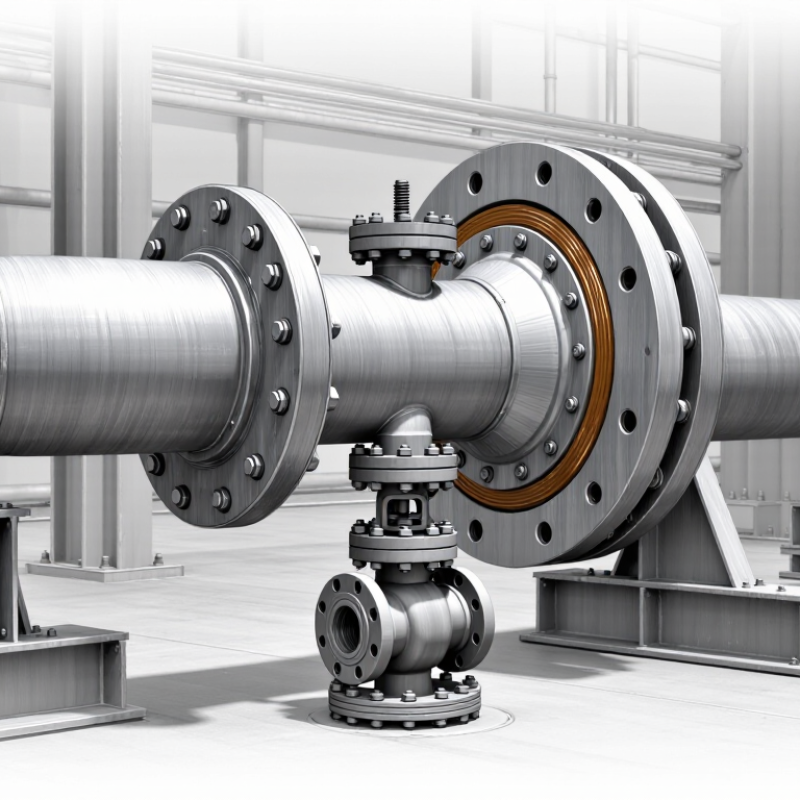
A reliable assessment begins with the actual installation. Picture a horizontal pipe leaving a pump, with a valve hanging below it. The valve creates bending and tension at the joint. Pipe supports, vibration, thermal movement, and accidental impact may add more stress. Designers normally check pressure ratings and external loads using recognized engineering standards, manufacturer data, and project specifications. They also inspect corrosion, uneven bolt tightening, gasket compression, and flange alignment. Small defects matter. Sometimes, the surrounding pipe fails before the flange does.
This guide explains how to estimate flange load capacity without confusing pressure rating with structural strength. It compares common flange materials, bolt patterns, load types, and practical safety factors. It also shows why catalog values cannot replace a site-specific review. The most responsible answer may require an inspection, calculation, or qualified engineer’s approval. That is less convenient, but safer. If the load supports people, critical equipment, or hazardous service, do not guess. Verify every assumption, record the evidence, and reconsider the design when conditions change.
Pipe Flange Load Capacity: What It Means and Why It Matters
Pipe flange load capacity describes how much force a flange connection can safely carry without excessive bending, leakage, or structural failure. It is different from the pipe’s pressure rating. A flange may handle high internal pressure but support very little external weight. The actual capacity depends on flange material, size, thickness, bolt strength, gasket type, pipe orientation, and nearby supports.
A suspended valve, filled pipe section, or vibrating equipment can create significant loads at the flange. For example, a short steel pipe filled with water may seem light, yet its weight increases sharply as length grows. Bending forces also rise when the load sits far from the flange face.
Engineers usually check axial force, shear, bending moment, bolt stress, gasket compression, and flange rotation. Standards provide valuable design limits, but they cannot replace project-specific calculations.
Field inspections often reveal practical problems. Bolts may have uneven tightening, pipes may be slightly misaligned, or supports may settle over time. These details matter. A flange should not be treated as a convenient lifting point unless it was designed for that purpose. I have seen assumptions fail. Even a small offset can produce unexpected stress. A qualified engineer should review unusual loads, temporary supports, and connections exposed to vibration or temperature changes. The safest answer is rarely a single weight number; it is a documented load assessment based on the complete assembly.
Key Factors That Determine How Much Weight a Flange Can Support
How Much Weight Can a Pipe Flange Hold Safely?
A pipe flange does not have one universal weight rating. Its safe capacity depends on several connected factors. Flange material, diameter, thickness, bolt size, and pressure class all affect performance. Temperature also matters. Heat can reduce material strength and change gasket behavior.
The load may not act straight downward. A long pipe creates bending and twisting forces at the flange face. Vibration, water hammer, corrosion, and poor alignment can increase stress. Nearby valves or fittings may add unexpected weight. Pipe supports should carry most of this load, while the flange maintains a sealed connection. Engineers normally check bolt tension, flange bending, gasket compression, operating pressure, and thermal expansion together. A basic weight estimate can be dangerously incomplete.
Tips:
Keep heavy valves independently supported. Check the actual flange dimensions and material certificates. Inspect bolt condition and tightening patterns. Leave room for thermal movement. Never assume a pressure rating equals a hanging-load rating. It does not. A qualified engineer should review unusual loads, especially on elevated or pressurized piping. Field experience shows that small alignment errors can become serious leaks over time. I have also seen calculations overlook temporary loads during installation. That gap deserves attention. Safety depends on the complete piping system, not the flange alone.
How to Calculate Safe Loads for Different Pipe Flange Types
How Much Weight Can a Pipe Flange Hold Safely?
Safe flange loading starts with the complete load case, not the flange diameter alone. Calculate the vertical weight from the pipe, fluid, insulation, valves, and nearby fittings. Then include bending from unsupported pipe length, thermal movement, vibration, and accidental impact. A simple field estimate uses load multiplied by distance to find bending moment. Compare that moment with the allowable flange, bolt, gasket, and pipe stresses.
Flange type changes the calculation. A weld neck flange usually transfers loads more smoothly because its hub supports the pipe transition. A slip-on flange may need more conservative treatment under bending. Socket weld and threaded flanges can be sensitive to local stress and installation quality. A lap joint flange often relies heavily on the stub end and bolting arrangement. Blind flanges must resist both pressure thrust and external loads. For pressure thrust, calculate pressure multiplied by the effective internal area, then check bolt tension and flange bending.
In practice, inspect bolt condition, gasket seating, pipe supports, and alignment before trusting a load estimate. A flange rated for pressure is not automatically rated for heavy equipment. I have seen calculations miss a small valve because its weight acted several feet from the support. That shortcut failed the review. Engineers commonly use applicable piping codes, manufacturer data, finite-element analysis, or verified flange tables for critical systems. When dimensions, temperature, or material data are uncertain, the result is only an estimate, not a safe working load.
How Much Weight Can a Pipe Flange Hold Safely? - How to Calculate Safe Loads for Different Pipe Flange Types
Illustrative axial-load screening examples for common pipe flange configurations. Values are not universal allowable loads.
| Flange type |
Nominal size |
Pressure class |
Reference pressure at 100°F
(bar) |
Approx. bore
(mm) |
Bolts |
Total bolt tensile area
(mm²) |
Internal pressure thrust
(kN) |
Illustrative bolt-only axial limit
(kN) |
Illustrative axial reserve after pressure thrust
(kN) |
| Weld neck |
NPS 2 |
Class 150 |
19.7 |
52.5 |
4 × 5/8 in |
584 |
4.3 |
169 |
165 |
| Slip-on |
NPS 4 |
Class 150 |
19.7 |
102.3 |
8 × 5/8 in |
1,168 |
16.2 |
338 |
322 |
| Lap joint |
NPS 8 |
Class 150 |
19.7 |
205.0 |
8 × 3/4 in |
1,724 |
64.8 |
500 |
435 |
| Threaded |
NPS 2 |
Class 300 |
51.0 |
52.5 |
8 × 3/4 in |
1,724 |
11.0 |
500 |
489 |
| Blind flange |
NPS 4 |
Class 300 |
51.0 |
102.3 |
8 × 3/4 in |
1,724 |
42.0 |
500 |
458 |
| Weld neck |
NPS 8 |
Class 300 |
51.0 |
205.0 |
8 × 7/8 in |
2,385 |
167.7 |
691 |
523 |
Calculation basis:
Internal pressure thrust = pressure × π × bore² ÷ 4.
The illustrative bolt-only axial limit uses total bolt tensile area × 289 MPa, where 289 MPa is a screening stress equal to 40% of a representative 724 MPa minimum bolt yield strength.
The illustrative axial reserve is the bolt-only axial limit minus the calculated pressure thrust.
| Load or design check |
Why it matters |
Required engineering check |
| Axial tension |
Can separate the flange faces and unload the gasket. |
Check bolt tension, gasket seating, flange bending, and joint separation. |
| Bending moment |
Produces uneven bolt loads and high local flange stress. |
Use a flange flexibility and bolt-load analysis; do not convert moment directly into weight. |
| Shear load |
May cause bolt shear, sliding, or pipe-wall overstress. |
Check friction, bolt shear, bearing, keying, and connected-pipe stresses. |
| Temperature and cycling |
Changes material strength, bolt preload, and gasket behavior. |
Use temperature-specific pressure ratings and fatigue or thermal-cycle checks. |
Important: Pressure classes are pressure-temperature ratings, not guaranteed hanging-load capacities. The values above are screening examples only and exclude flange bending, gasket behavior, bolt preload variation, pipe-wall strength, weld capacity, vibration, corrosion, fatigue, and external moments. A qualified piping or mechanical engineer should verify any actual suspended or externally applied load before service.
Common Failure Risks When Flanges Are Overloaded
A pipe flange does not have one universal safe weight limit. Its capacity depends on flange class, material, temperature, bolt preload, gasket type, and pipe geometry. ASME B16.5-2022 provides pressure-temperature ratings, but these ratings do not automatically approve heavy valves, supports, or suspended pipe loads. A flange rated for high pressure may still fail under excessive bending or external moment.
Overloading often begins with uneven bolt tightening. One side of the gasket can lose compression, creating a narrow leak path. ASME PCC-1-2022 identifies controlled bolting and verified assembly practices as key elements of flange integrity. Thermal expansion can then increase the load, especially near rigid supports. In severe cases, bolts yield, the flange rotates, or the gasket blows out suddenly. The most dangerous assumption is simple: “The flange looks thick enough.” Visual thickness is not a structural calculation.
Tips: Check the manufacturer’s pressure-temperature table and piping stress analysis. Include valve weight, thermal movement, vibration, and nozzle loads. Measure bolt tension when the joint is critical. Use calibrated tools, not guesswork. A field inspection report from the Energy Institute stresses that flange failures often involve installation or maintenance weaknesses, not only design pressure. I would still treat every published limit cautiously; real systems rarely match laboratory conditions. Verify the joint after maintenance, because one unevenly tightened bolt can change the whole load path.
How to Verify Flange Safety Through Standards and Engineering Checks
A pipe flange does not have one universal safe weight rating. Its capacity depends on pressure, temperature, flange class, material, bolts, gasket, and connected pipe geometry. A suspended valve may seem light, yet its weight can create a large bending moment at the flange face. That detail is often missed.
Verification should begin with the project piping code and the applicable flange standard, such as ASME B16.5 or EN 1092-1. These standards define dimensions, pressure-temperature ratings, materials, and testing requirements. They do not automatically approve every external load. An engineer should calculate internal pressure thrust, bolt preload, gasket seating, bending moment, shear, and local pipe stress. Use certified material data and the actual operating temperature. Check occasional and fatigue loads where vibration or thermal cycling exists.
Field evidence matters too. Inspect flange faces for distortion, corrosion, scratches, and uneven contact. Confirm bolt grade, tightening sequence, calibrated torque records, and gasket condition. A practical check is measuring pipe support movement before and after installation. Small displacement can reveal excessive flange loading. A quick rule of thumb is tempting, but it can mislead. I have seen a low-pressure joint fail because poor alignment forced the bolts to carry pipe strain. If calculations and site conditions disagree, stop and request a documented review by a qualified piping engineer. Safety margins should be visible, not assumed.
How Much Weight Can a Pipe Flange Hold Safely?
Pressure-thrust screening based on ASME B16.5 pressure classes at approximately 100°F for a 4-inch internal bore
The chart shows the axial pressure thrust produced by the rated internal pressure acting on a 4-inch bore:
F = P × πD² / 4. It is not a permitted external hanging-load or lifting capacity.
A safe flange assessment must also verify flange bending, bolt tensile and shear capacity, gasket seating,
pipe-support reactions, temperature derating, external moments, and the applicable design code.
Conclusion
Understanding how much weight can a pipe flange hold safely requires more than looking at its nominal size. Load capacity depends on the flange type, material grade, pressure rating, bolt size and strength, gasket selection, pipe alignment, temperature, corrosion, and the way the load is applied. Axial weight, bending force, vibration, and external moments can affect the connection differently, so a flange rated for internal pressure is not automatically suitable for supporting heavy equipment or suspended piping.
To calculate a safe load, engineers review flange dimensions, bolt preload, gasket behavior, pipe supports, and the combined stresses under operating conditions. Overloading may cause bolt yielding, gasket leakage, flange deformation, cracking, or sudden joint separation. A reliable assessment should compare calculated loads with applicable design standards, manufacturer data, and project safety factors. When asking “how much weight can a pipe flange hold,” the safest answer is determined through a complete engineering check rather than a single universal value.

 EZ STEEL